My Personal Philosophy on Digital Learning

My philosophy of digital learning is simple and no different from my general teaching philosophy. I believe that technology is only a tool meant to improve education, but it is a critical tool in a disembodied learning environment. No matter how efficient or advanced technology they are, they cannot replace the teacher. As a future teacher, I think it is very important to stay up to date with new information and find the best ways to connect the material to students. I have found that technology can provide practical, interactive, usable lessons and activities that help them develop a positive attitude toward learning. Research shows that students learn better and are more engaged in class when technology is integrated into their learning experience. I have noticed that most students today are constantly using technology in one form or another. Whether it’s being on social networking, blogging, texting, streaming music or even shopping, it’s clear that technology is an integral part of their lives. Therefore, instead of using proven methods that have been used for years, it would be more beneficial to teach students using technology that is more convenient for most people. But I also have to keep in mind that when I use technology, not everyone has equal access to all the benefits of technology, and many people do not even own a computer. So I need to create equal access for all and ensure that all my students have the same conditions to do the work, which may include additional knowledge of technology. I have noticed many times that people often get excited about using technology and forget that technology can both enhance our learning and create a digital divide between different social groups. My students and colleagues are different, and while a disembodied learning environment can have many positives, the fact that people have different learning styles and different understandings of, exposure to, and experience with technology requires me to adapt my use of technology. into a special education environment. That’s why my teaching philosophy is very simple in a disembodied learning environment; technology is a  tool – any tool can have both positive and negative results when used. As a future teacher, my goal is to promote student learning using various tools that are most appropriate and help to achieve the best possible results, taking into account all the circumstances. I believe that one of the goals of education is to communicate something meaningful, which requires that any technology I use must also be meaningful. Without the thoughtful use of technology, I cannot engage and challenge my students.
Using Technology to Support Diverse Learners

Technology has changed our planet and everyday lives over time. It has transformed our lives in unbelievable ways, but here we highlight the many common ways technology is changing our lives and how we learn today. Furthermore, technology has produced incredible tools and resources that have made educational knowledge easily accessible. This allows teachers to enhance their lesson planning and teaching strategies while also being more inclusive of different learning styles. This use of technology will encourage students’ learning and self-esteem while also enabling teachers to move beyond their traditional boundaries. There are two strategies of technology found that I believe are the best examples that show the use of technology to support diverse learning.

The First technology strategy I found is called “Game-based learning and gamification,” which both try to solve a problem, and motivate, and promote learning using game-based thinking and techniques. Gamification is the process of transforming the learning process into a game by including game characteristics such as point scoring, accomplishment badges, and rules of play. Where collaboration is essential, failure provides valuable feedback for learning, and learning and assessment are closely related. Using a game to aid in learning is known as game-based learning (GBL). Rather than being a full pedagogical system, GBL aims to teach a particular skill or learning objective. It is a technological strategy that enhances the entire learning experience in numerous ways and works in conjunction with both e-learning and conventional teaching approaches. By piqueing students’ attention and motivating them to keep learning, this tactic also seeks to increase satisfaction and engagement. Through the use of game-based tactics and procedures, game-based learning helps to inspire, motivate, and resolve issues. Gaming elements can be incorporated into corporate training programs and student learning modules in a variety of ways. Innovative, inspiring, and thrilling gaming components are combined with learning programs to increase their efficacy using gamification tactics.

Games as a Context for Learning & Using Games to Support Learning

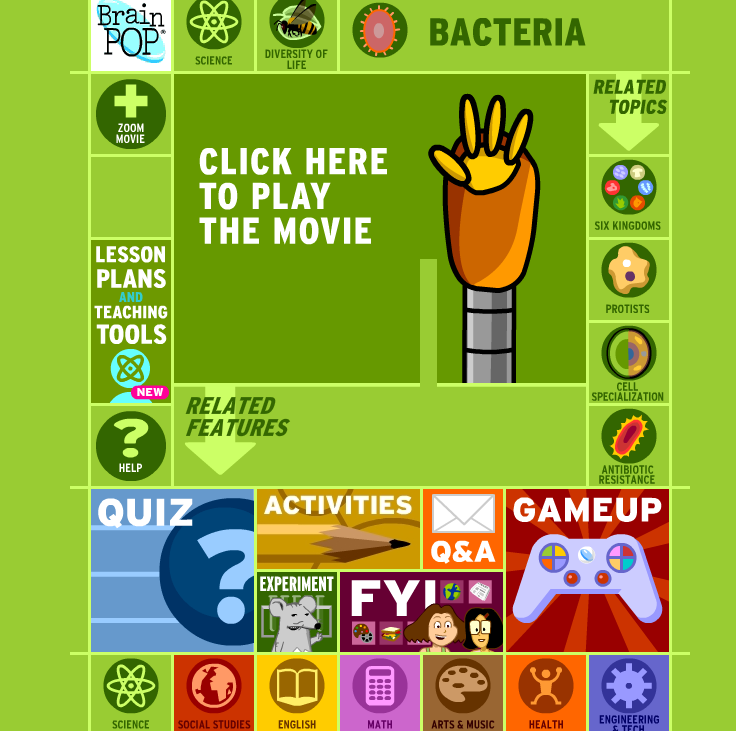
The second technology strategy I found makes use of BrainPoP, an educational website that offers kids in grades K–12 a plethora of videos and quizzes covering a broad range of disciplines. The goal of the website BrainPOP is to facilitate distinction. In addition to a variety of creative tools and activities, such as a movie creator, interactive quizzes, and concept mapping, it offers over 1,000 informative videos on topics that cover all curriculum areas. It is a platform that enables educators to alter their assignments to meet the needs of their students in terms of content, procedure, and product. Additionally, it supports educators in developing adaptable and successful differentiation strategies, especially in remote learning settings. With ease, teachers can differentiate instruction based on subject matter, method of learning, and final result. Teachers can even utilize movies in BrainPOP to diversify their lessons by having students see only a segment of the film, which helps students focus on the right part of the movie and ensures they understand the lesson. This allows for the essential practices for students with disabilities and English language learners to be integrated by teachers. The design of BrainPOP facilitates access and effect for all students by making content, procedure, and product smooth and simple. Where individual students, small groups, or remote learning are made meaningful and successful by using these adaptable differentiation strategies and tactics.

 BrainPOP Overview

Four Digital Learning Resources for Teachers & Students

Zoom is a communications platform that allows people to connect with video, audio, phone, and chat providing the opportunity for teachers and students to meet synchronously online. This gives teachers the chance to have a conference with many attendees traveling from various regions. Zoom makes it simple for teachers to transition between various teaching techniques throughout a lesson in a classroom setting. It has a screen-sharing feature that allows one to share slides or other information with students during a lecture. You can also annotate the slides on the screen for students to view. Instructors can set up Zoom meetings to conduct courses online and record them for later access by students. Zoom helps educators create more inclusive classrooms, whether students are learning in person or remotely.

Teaching with Zoom: Tips and Strategies

A student engagement tool called Seesaw encourages students of all ages to do their best work while simultaneously saving teachers’ time. It makes it possible to use artistic tools to create videos, create sketches, and more to record learning and put it in a portfolio. It allows teachers to share activities with pupils that they have created or found. Some teachers use Seesaw in their class primarily as a place for students to share their work and specifically encourage individual reflection and peer feedback. In addition to serving as a repository for student work, Seesaw also serves as a forum for feedback from professors, classmates, and other experts. It is also a tool that can empower students to create, reflect, share, and collaborate.

What is Seesaw?

With the help of an engagement tool such as BrainPOP, both teachers and students can take part in the learning process. Students can participate in instructional games, animated films, and activities on this website, which has over 1,000 short animated films, quizzes, and related materials. It enables instructors to use BrainPOP to offer fresh subjects to their students. Teachers can use the video and instructions in this learning resource to help students learn topics by following step-by-step directions. Students can demonstrate their comprehension and knowledge by finishing pre-written mini-tasks: For instance, you can use the knowledge you get from the activities in Brainpop to complete quizzes, idea maps, compilations of movies, graphic organizers, and worksheets. With comedy, complexity, and relevance to support students’ individual learning paths. This website is the best way to be more involved in their learning.

About BrainPop & BrainPop Bloom’s Taxonomy

Open-world 3D gaming platform Minecraft enables users to mine resources, create tools and materials, and construct nearly anything they can think of. It is a place where students actively compete for resources in the cooperative game of Minecraft, but they can also utilize it to collaborate on problems and difficulties. Teachers can use Minecraft as a tool to enhance synchronous learning in the classroom, in which students work together virtually, or as assignments that are turned in to the teacher or other students after completion. In order to encourage each student to effectively speak and collaborate, it aids teachers in facilitating dialogues and reflections. This game allows students a great way to demonstrate their understanding through the use of Minecraft gameplay to design, model, or create their own environment and world.

Minecraft in the Classroom & Minecraft Bloom’s Taxonomy